How to generate qualified leads and increase the conversion of contacts into customers?
A company can receive dozens of contact requests and still have few real sales opportunities. The number of forms filled in does not, by itself, tell you whether people have the right problem, the ability to buy or the intention to move forward.
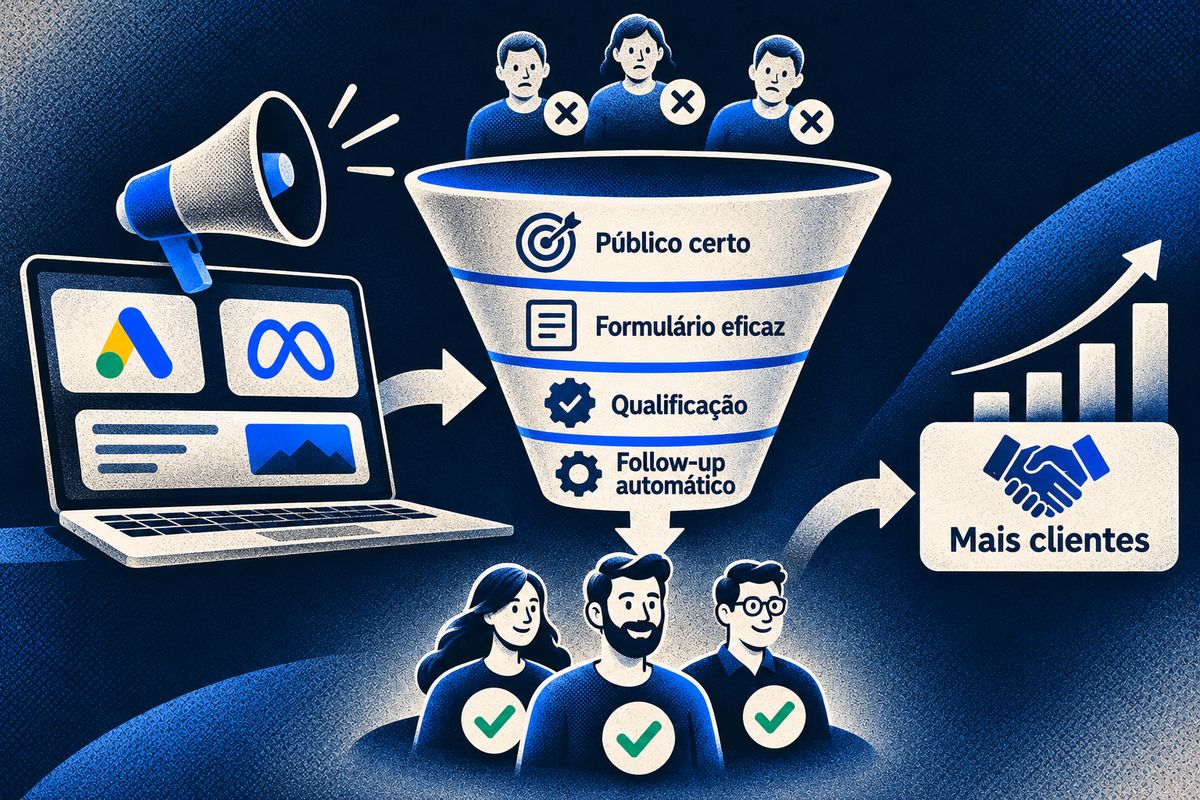
Generating qualified leads requires connecting advertising to the sales process. You need to attract the right people, collect enough information to understand their interest and make sure there is follow-up after the first contact.
What is a qualified lead?
A lead is a person or organisation that has shown interest and left a way to be contacted. A qualified lead is a contact that meets the commercial criteria defined by the company and can represent a real opportunity.
Those criteria vary by business. For a company that sells services to other companies, they might include size, sector, a concrete need, available budget and expected decision timeframe. For a consumer service, the relevant signals may be different.
Interest is not purchase intent
Downloading a guide, asking for a quote and booking a demo are different behaviours. All of them can have value, but they do not indicate the same degree of readiness to buy.
That is why the sales team should know why it considers a contact a priority. Without a shared definition, marketing can celebrate the growth in leads while sales stay flat.
Why do so many contacts never become customers?
The problem is not always in the ads. It can arise in the promise used to attract contacts, in the lack of selection criteria or in the way requests are handled.
The campaign attracts people outside the intended audience
An overly generic message can bring cheap but irrelevant contacts. For example, advertising a business solution without making clear who it is for can attract requests from people looking for a completely different product.
Before increasing the budget, check that the targeting, the message and the landing page correctly describe the offer, the conditions and the type of customer the company can serve.
The form asks for too little or too much information
A form with only a name and email makes it easy to submit, but can leave the team without context. A form that is too long can put off people with a genuine interest.
The aim is not to collect every detail on the first contact. It is to ask for the minimum information needed to decide the next step, respecting privacy and explaining how the data will be used.
Contacts arrive, but nobody follows them up
A lead with potential can lose interest if it does not receive a clear reply. The lack of an owner, scattered messages and no record of contact attempts make it hard to see where opportunities are lost.
A CRM, a customer relationship management system, can help centralise requests and tasks. However, a well-managed spreadsheet may be enough in a small operation, as long as there is ownership and follow-up. If the tools available do not fit the company's process, a custom CRM may make sense.
How do you generate qualified leads without complicating the sales process?
Start by defining the opportunity the company is looking for, before choosing campaigns or tools. Then make the information flow from the first ad to the commercial result.
1. Define the customer profile that makes sense
Identify the problems the company solves, who takes part in the decision and which signals indicate a good fit. Also include exclusion criteria: requests outside your field, needs you cannot meet or conditions incompatible with the service.
The definition should come out of conversations between marketing and sales, not just from assumptions about the audience.
2. Align the ad's promise with the real offer
Clarify the benefit, the situation the solution addresses and, where relevant, the conditions of access. A specific message may generate fewer contacts and still produce better sales conversations.
The landing page should continue the same proposal presented in the ad. Changing the focus or hiding important conditions can increase friction and reduce trust.
3. Ask questions that help qualify
Ask only for data with demonstrable commercial use. A question about the main problem, the type of project or the decision timeframe can be more useful than several fields with no use in the follow-up.
If the answer needs context, consider a diagnostic conversation instead of multiplying questions on the form.
4. Establish the follow-up for each request
Define who receives the leads, how the first contact is made, when to try again and at what point an opportunity stops being active. Record the reason when a request does not move forward.
The structure of a lead generation system should include this handover to the sales area. Otherwise, advertising ends precisely when the selling work begins.
5. Feed real results back to the campaigns
Do not assess only forms submitted. Also record how many contacts were considered suitable, how many led to meetings or proposals and how many became customers.
This feedback helps you see which channels and messages attract relevant opportunities. When there is not enough information to link a sale to the campaign, acknowledge that limitation instead of attributing results without evidence.
Which indicators help tell volume from quality?
Track acquisition and sales metrics together. An improvement in one isolated indicator can hide a deterioration in another stage of the process.
Indicator | What it lets you assess |
|---|---|
Cost per lead | How much it costs to obtain each contact, regardless of quality. |
Qualification rate | What share of contacts meets the commercial criteria. |
Cost per qualified lead | How much is invested to generate a contact considered relevant. |
Proposal rate | How many opportunities move on to a concrete commercial stage. |
Customer conversion rate | How many leads actually become customers. |
An illustrative example
Imagine two campaigns with the same investment of €600. Campaign A generates 60 leads, of which 6 are qualified. Campaign B generates 30 leads, of which 12 are qualified.
In campaign A, the cost per lead is €10 and the cost per qualified lead is €100. In campaign B, the figures are €20 and €50, respectively. Despite generating fewer contacts and seeming more expensive at first glance, campaign B produces more relevant opportunities per euro invested.
This example does not predict sales. A sound decision also requires analysing proposals, customers won, sales value and margin.
Frequently asked questions
What is the difference between a lead and a qualified lead?
A lead is a contact that has shown interest. A qualified lead meets the criteria defined by the company and shows enough signals to justify a commercial approach.
Is it better to generate many leads or a few qualified leads?
It depends on the team's capacity and the business model, but volume alone should not be the goal. The priority is to generate opportunities the company can follow up and convert profitably.
How can I tell whether the problem is in advertising or in sales?
Analyse at which stage contacts stop moving forward. If people arrive who do not fit, review the audience and the message; if suitable opportunities arrive but get no reply, review the sales process.
Is a CRM mandatory to manage leads?
No. A small operation can start with a simple record and clear rules. A CRM becomes useful when you need to coordinate owners, contact history and sales stages more consistently.
Does automating contact improve qualification?
It can improve speed and organisation, but it does not replace commercial criteria or conversations that need context. Automating irrelevant messages only makes an ineffective process faster.
Can Norde help generate better-qualified leads?
Yes. We connect advertising, qualification criteria and sales follow-up in a single process. We start by finding where opportunities are lost, so as not to increase investment before fixing the gap.
How can Norde help your company?
The first step is to understand what kind of contact is worth attracting and what happens after it arrives. This lets you tell an advertising problem from a failure in qualification, handling or follow-up.
At Norde, we start from the sales process and the concrete obstacles to conversion. Only then do we assess whether it is enough to improve messages and routines, organise the existing tools or implement a more integrated lead generation system; we recommend the simplest solution that answers the problem.
If your company receives contacts that never become customers, get in touch. We reply within 24 hours, with no obligation. There are no lock-in contracts or exit penalties, and accounts, data and systems stay with you.
Does your company receive contacts, but few become customers?
We analyse acquisition, qualification and follow-up of commercial opportunities.